
The SaaS Playbook
Rob Walling2023
- Length
- 4h 14m~200 pages
- Read
- Dec 19th - 23rd '23
Summary
Building a sustainable SaaS business means choosing your growth path deliberately: bootstrapped vs. funded changes every decision. Churn is the silent killer — reducing it matters more than acquiring new customers. Pricing should be value-based, not cost-based, and you should raise prices more often than you think. The ideal SaaS metrics (LTV:CAC > 3:1, net revenue retention > 100%, magic number > 0.75) are guideposts, not gospel. Focus on a narrow niche first, nail product-market fit, then expand. Marketing should be a repeatable system, not a series of one-off experiments.
Key Takeaways
Notes
1: The Playbook
- 4 types of funding: bootstrapped, venture funded, self funded, mostly bootstrapped
- SaaS is great in so many ways
- PMF → growth channel → escape velocity
- 4 SaaS super-strategies / cheat codes:
- Expansion revenue
- Virality
- Net negative churn
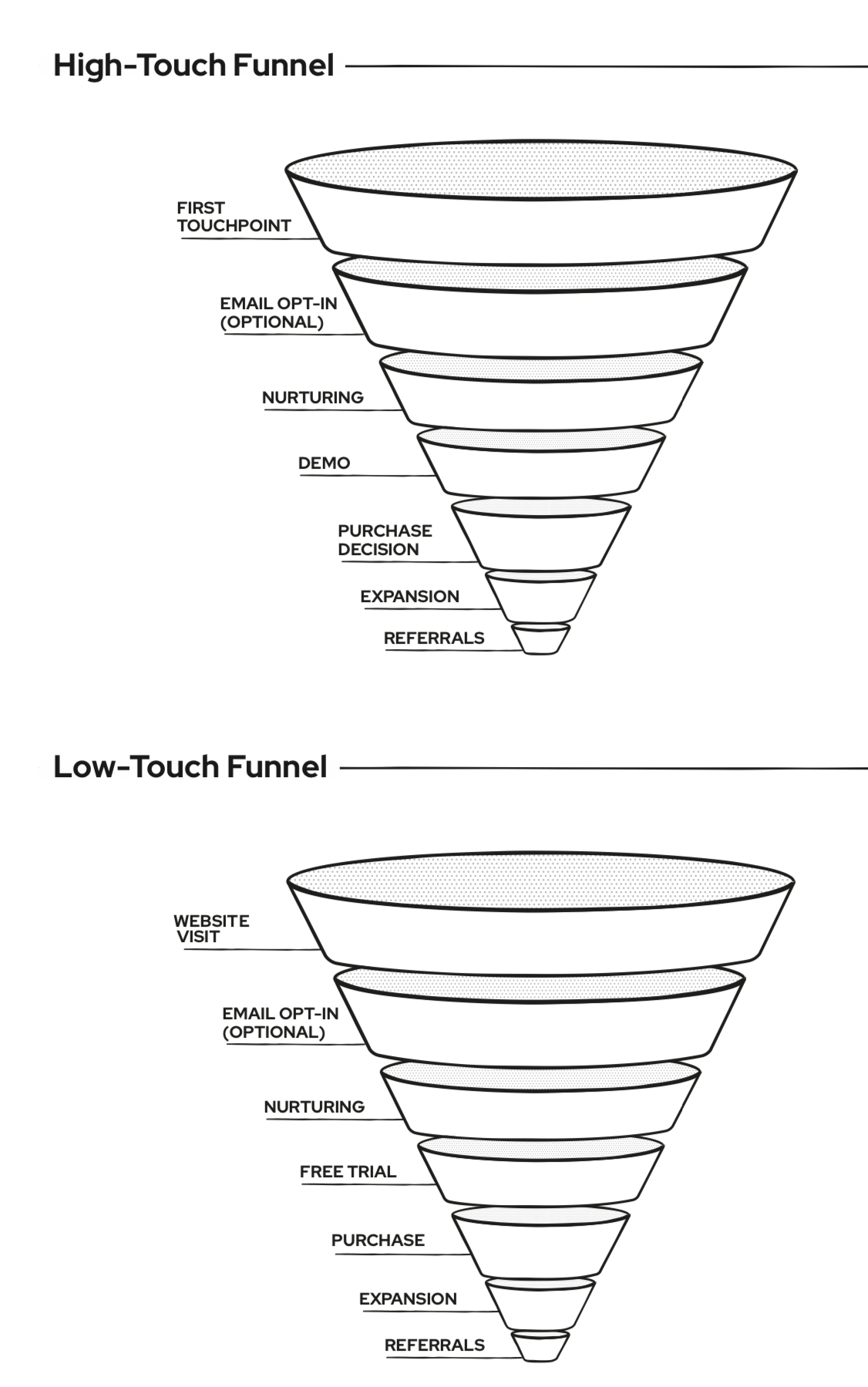
- Dual funnels
2: Market
- Talk with customers: deploy empathy
- Determine problem to solve
- Prioritize feature requests
- Places to innovate: price, sales model, brand (underdogs)
- Moats:
- Network effects: Integrations, data
- Brand: Reputation, positioning
- Switching cost: NOT features
- Mistakes:
- I18n / localization
- White labeling
- Adding additional verticals too early
- Complexity in product, marketing
- Underpricing
3: Pricing
- Consider average revenue per account
- Segment customer tiers
- Expansion revenue: pay more as you get more value out of the product
- Tie it to customer success
- Need to charge more for enterprise
- Charge 10-20x more
- Freemium only makes sense when:
- Virality is high
- Paid and free are not diff markets
- Generally, require a credit card upfront
- Remove later on*
- Aspirational pricing
4: Marketing
- Types of marketing:
- High touch, low touch, dual*
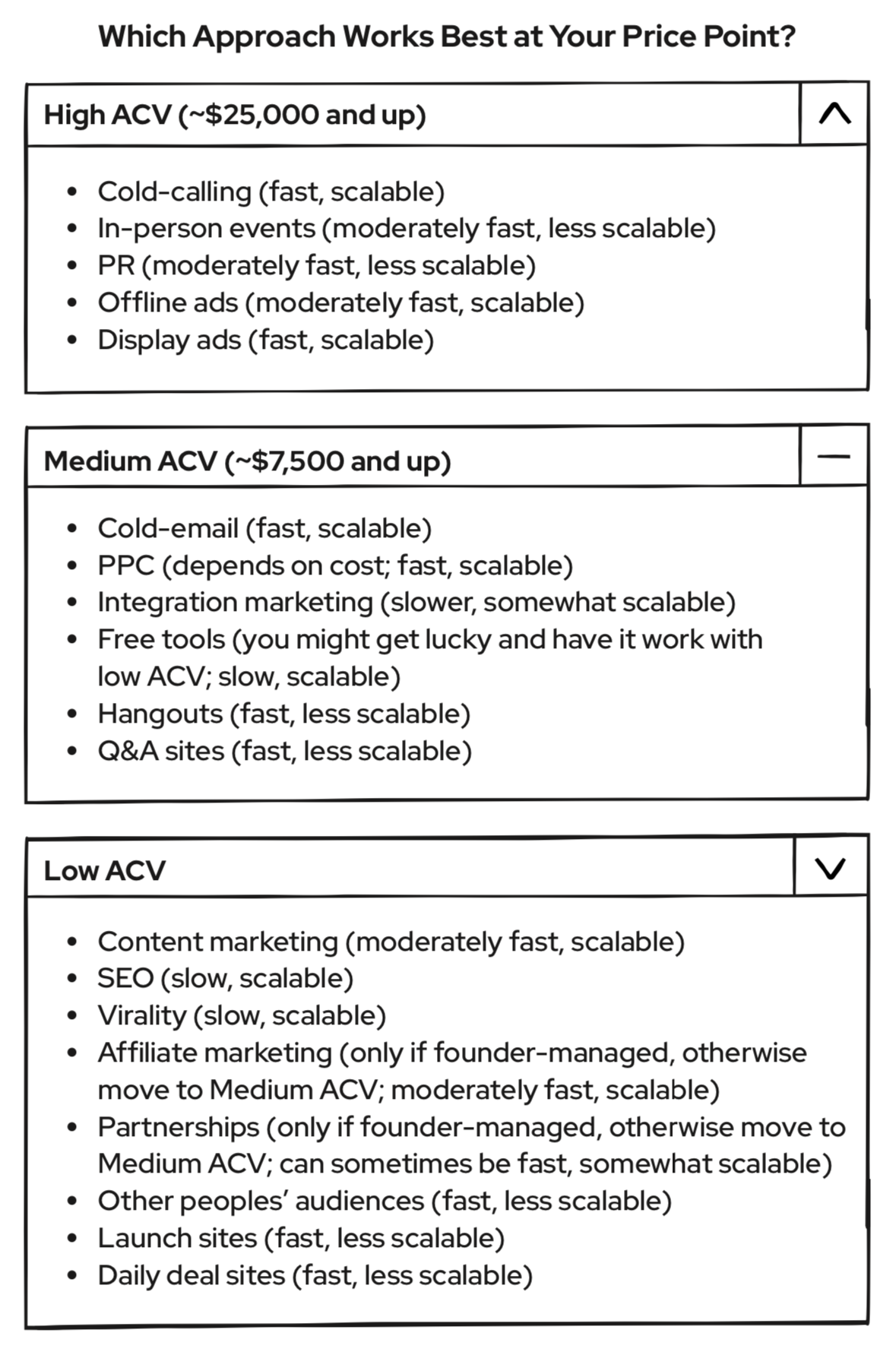
- 20 B2B SaaS marketing approaches:
- SEO
- PPC: pay per click, AdWords
- Cold outreach
- Integration marketing: +promotion
- Content marketing: blog posts
- Affiliate marketing, resellers
- Max 20-30%
- In-person events, trade shows
- Free tools
- Hangouts: online community
- Q+A sites
- Virality
- Other people’s audiences: eg. podcast
- Daily deal sites: AppSumo
- Launch sites: Product Hunt
- Building an audience / movement
- Display ads
- Stunt marketing
- Speaking engagements
- PR
- Offline ads
- 3 factors: speed, cost, scalability*
- ICE for marketing, feature selection
- Sales: see if product feeds your needs
- What’s your decision marking process?
- CRM
5: Team
- 10 roles:
- Product
- Design
- Engineering: CTO → VP → Director
- Marketing
- Sales: SDR, BDR (quality leads)
- Customer support
- Customer success: CSM
- People ops: HR
- Legal
- Finance
- Task, project, owner level thinkers
- Praise in public, correct in private
- Trust that you’ll be fair
- Joh description = sales pitch (be quirky)
- 4 incentive plans: bonuses, equity, stock options, profit sharing (pool)
6: 80/20 SaaS metrics
- 2 North Star metrics: MRR, MoM growth rate
- 3 high, 3 low metrics:
- CAC, sales effort, churn (revenue)
- ACV, expansion revenue, referrals
- Ask for referrals after 60-90 days
- Virality: strong vs weak viral loops
- Churn:
- Target: <1-3/5% per month
- Segment by pricing tiers, marketing channels, time
- Net negative churn: expansion revenue > revenue lost to churn
- Minimize time to value realization
7: Mindset
- Manage your own psychology
- Money: bigger mistakes, faster
- Roadblock → speed bump
- Personal advisory board
- Same position + point of success
- Founder retreats
131- The SaaS Playbook
131- The SaaS Playbook-1