The Happiness Hypothesis
Jonathan Haidt2006
- Length
- 10h 18m~317 pages
- Read
- Apr 20th - 22nd '23
Summary
The mind is a rider on an elephant – conscious reasoning steering a much larger unconscious system. Happiness follows a formula: H = S + C + V, where S is your genetic set point (50-80%), C is conditions (relationships, autonomy, commute), and V is voluntary activities (pleasures and flow). The adaptation principle means we're sensitive to changes, not absolutes. Relationships are the single best predictor of happiness. Post-traumatic growth is real. Six virtues appear across all cultures: wisdom, courage, humanity, justice, temperance, and transcendence.
“There is nothing either good or bad, but thinking makes it so.”
~ Shakespeare
Key Takeaways
Notes
1: The divided self
- Rider on an elephant
- Confabulation: brain narrates all actions, including those out of conscious control
- Automatic vs controlled processes
- Eg. flashing words changes behavior
- Forebrain (2MYA) → language → planning
- Moravec’s paradox: 3.2B vs 2M years
2: Changing your mind
- Subliminal bias towards things that sound like our own name
- Negativity bias
- Personality is more genetic than we think
- 50-80% of happiness is genetic
- Meditation, CBT, SSRIs
3: Reciprocity with a vengeance
- Kin altruism, genetic tit-for-tat
- Eg. stranger Christmas cards
- #1 sales strategy: reciprocity (give first)
- Mimicry
4: The faults of others
- Motivated reasoning → hypocrisy
- Therefore, life is all social comparison
- Cultivate a reputation for being fair
- Accurate view of others, rosy view of self
- Eg. cooperation game: predicted 84% self, 64% others, but only 61% actual
- Eg. donation: predicted $2.44 self, $1.83 others, but only $1.53 actual
- ^ when told actual, revised others estimates but not own estimate
- Ambiguity allows for motived reasoning
- Eg. leadership traits to fit self (70% above average, 2% below)
- 94% feel they do above average work
- Total contribution: 120-139%
- Naive realism: self-optimism bias
- Idealism, religious dualism of good and evil
- Learn to recognize your biases (“should”)
5: The pursuit of happiness
- Pleasure comes from the journey, not end
- Adaptation principle: mind is more sensitive to changes than absolute levels
- Experienced happiness: H = S + C + V
- S: genetic set point
- C: conditions
- V: voluntary activities
- Conditions: noise, commute, autonomy, shame/appearance, relationships
- Voluntary: pleasure + gratifications (flow)
- “Evolution has made us strategically irrational for good”
- Conspicuous vs inconspicuous consumption
- Paradox of choice: maximizers vs satisficers
6: Love and attachments
- Genetic mammalian need for a mother
- Secure base needed for play, learning
- Attachment theory: safety and exploration
- Babies with developing brains need care, requiring commitment between parents
- Passionate → companionate love
- Relationships: best indicator of happiness
7: The uses of adversity
- Post-traumatic growth: stress → character
- 3 benefits of trauma:
- Hidden abilities, character, hope
- Deepens relationships
- Directs priorities to the present
- 3 levels of personality;
- Basic traits (OCEAN)
- Characteristic adaptations: personal goals, value, beliefs, defense + coping
- Life story: vitalizing life myth
- 4 types of life goals at level 2 ↑:
- Work and achievement
- Relationships and intimacy
- Religion and spirituality
- Generativity: leaving a legacy
- Types of life stories:
- Commitment, contamination
- Happier people’s short-term goals match long-term goals
- Trauma allows for inner coherence
- Three coping mechanisms:
- Active: taking direct action to fix
- Reappraisal: looking for silver linings
- Avoidance: blunt emotional reactions
- Religion and happiness: outlet for trauma, innermost feelings, community values
- Explicit vs tacit knowledge
- Three responses to situations/environment:
- Adaptation: changing self
- Shaping: changing the environment
- Selection: moving to new environment
8: The felicity of virtue
- Ben Franklin’s 13 virtues chart
- Virtues: cultural perceptions of what is good
- Six universal virtues:
- Wisdom, courage, humanity, justice, temperance, transcendence (connect to something larger than self)
- Selfish gene: kin + reciprocal altruism
- Demographic vs moral diversity
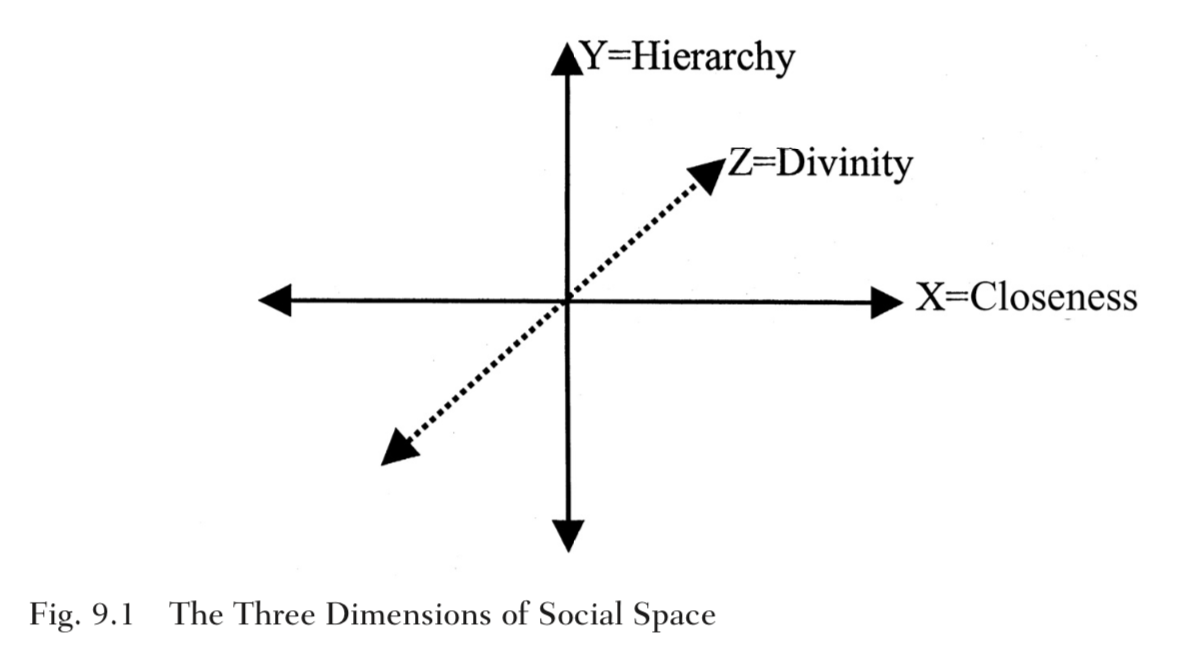
9: Divinity with or without God
- Power dynamics inherent in language
- Three aspects of morality:
- Autonomy: protect from harm, freedom
- Community: obedience, loyalty, leader
- Divinity: free from lust, greed, hatred
- Elevation: emotion of seeing others move up on the scale of divinity, doing a good deed
- Oxytocin release
- Bonding, love, trust, altruism
- Church: collective elevation
- Science removes wonder, elevation
- Divinity ↔︎ autonomy
10: Happiness comes from between
- Purpose within life, not of life (evolution)
- Love / relationships, esteem / work / flow
- Effectance: need to make thing happen
- Competence, industry, mastery
- Vital engagement: enjoyed absorption (flow) + subjective significance (meaning)
- Physical → psychological → sociocultural
- Cross-level coherence: harmony of ↑
- Genetics, culture/memetic co-evolve
- Group selection: religion evolved
- Synchronized movement, chants