The Culture Map
Erin Meyer2014
- Length
- 7h 42m~283 pages
- Read
- Jul 16th - 19th '24
Summary
Erin Meyer explores how culture affects individual behavior by highlighting eight key scales of cultural variance, including communication, leadership, and trust. She contrasts low-context, explicit cultures like the US with high-context, implicit cultures like those in Asia, and examines different approaches to feedback and decision-making. Understanding these cultural differences is crucial for effective global communication and interaction.
Key Takeaways
- Individual behavior results from both personality and cultural traits
- 8 scales of cultural variance:
- Communicating: low ↔ high context
- Evaluating: direct ↔ indirect negative feedback
- Persuading: principles ↔ applications first
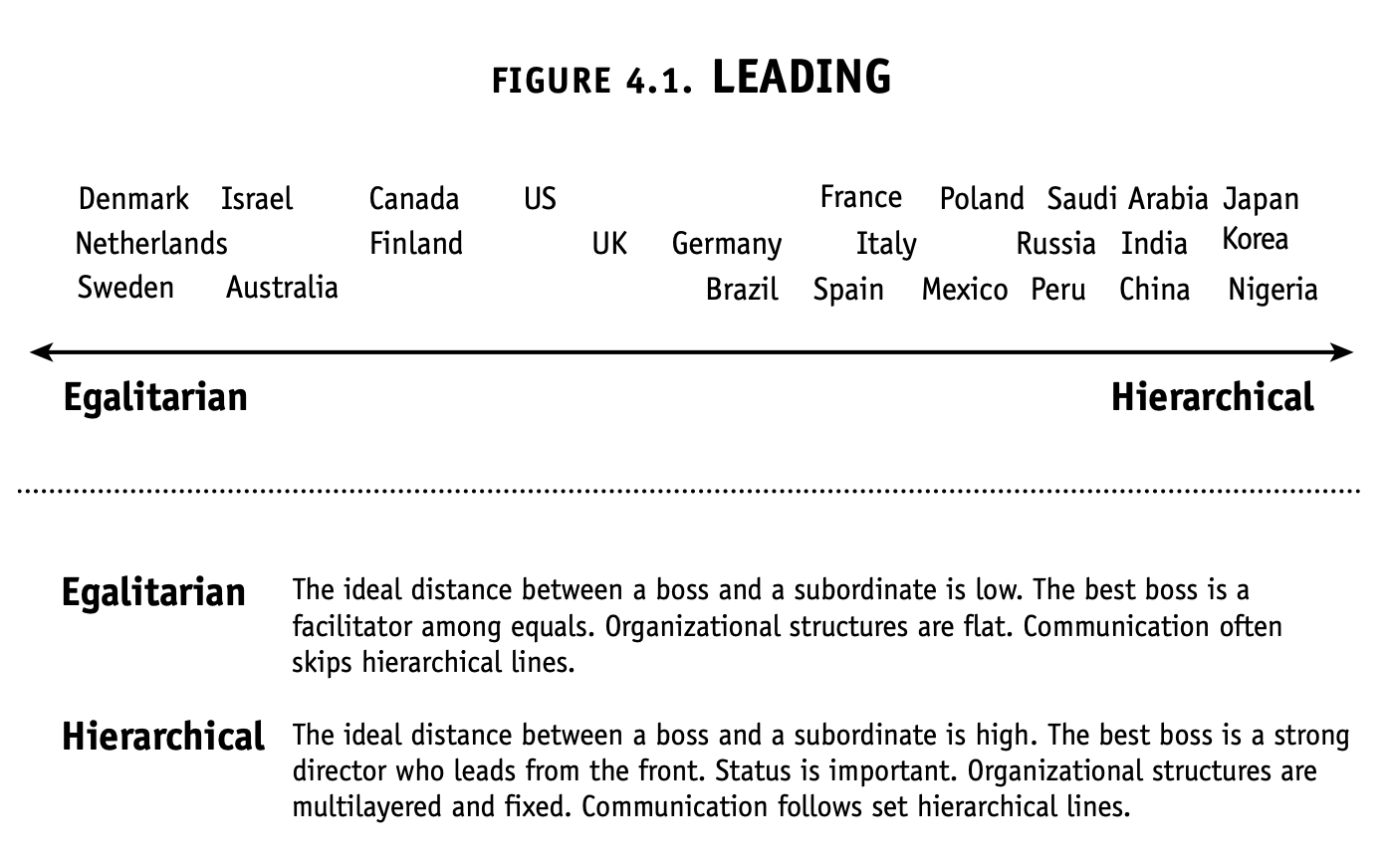
- Leading: egalitarian ↔ hierarchical
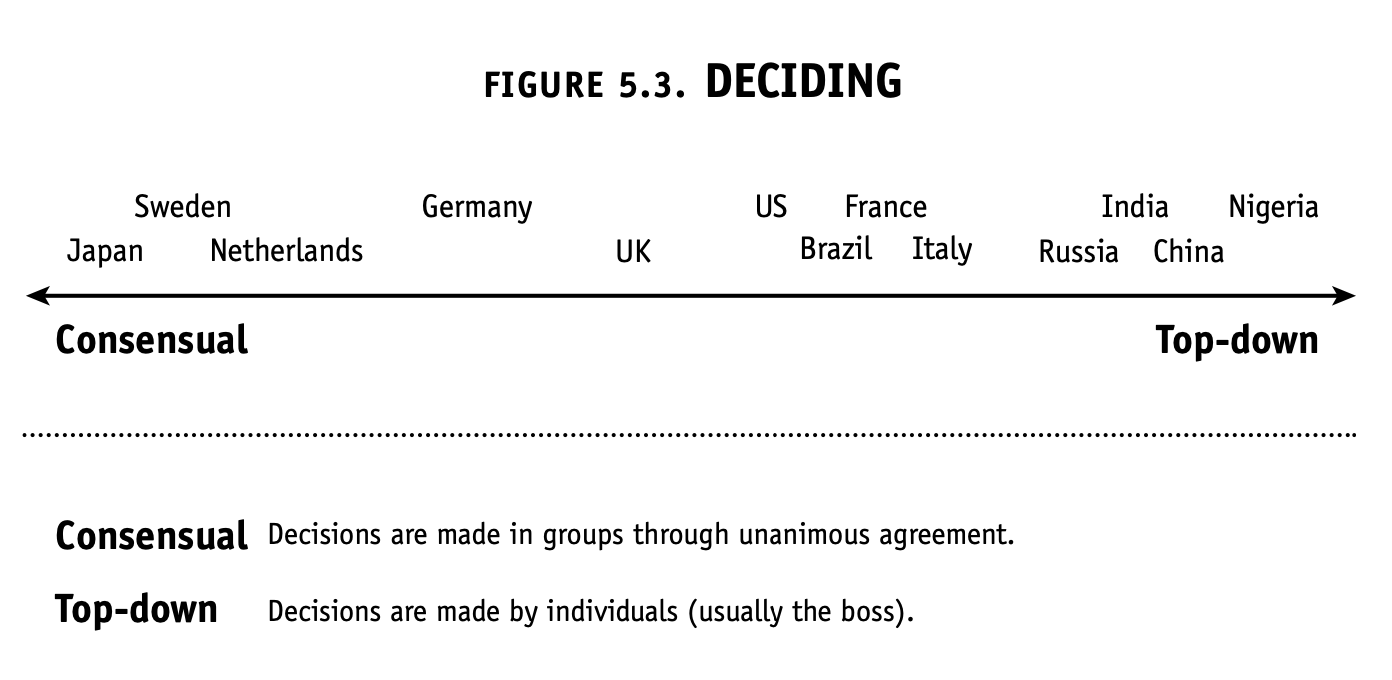
- Deciding: consensual ↔ top-down
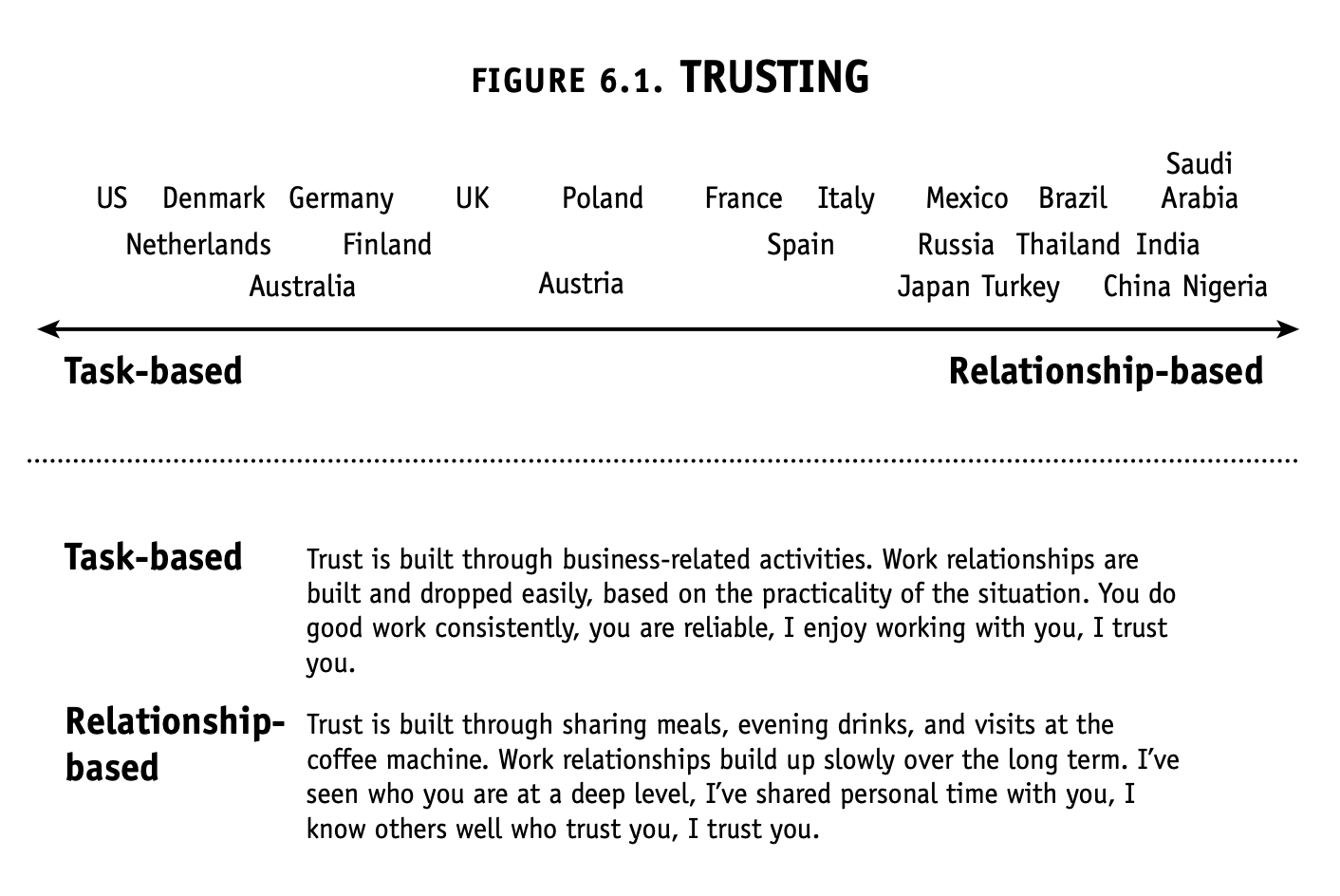
- Trusting: task ↔ relationship-based (cognitive, affective trust)
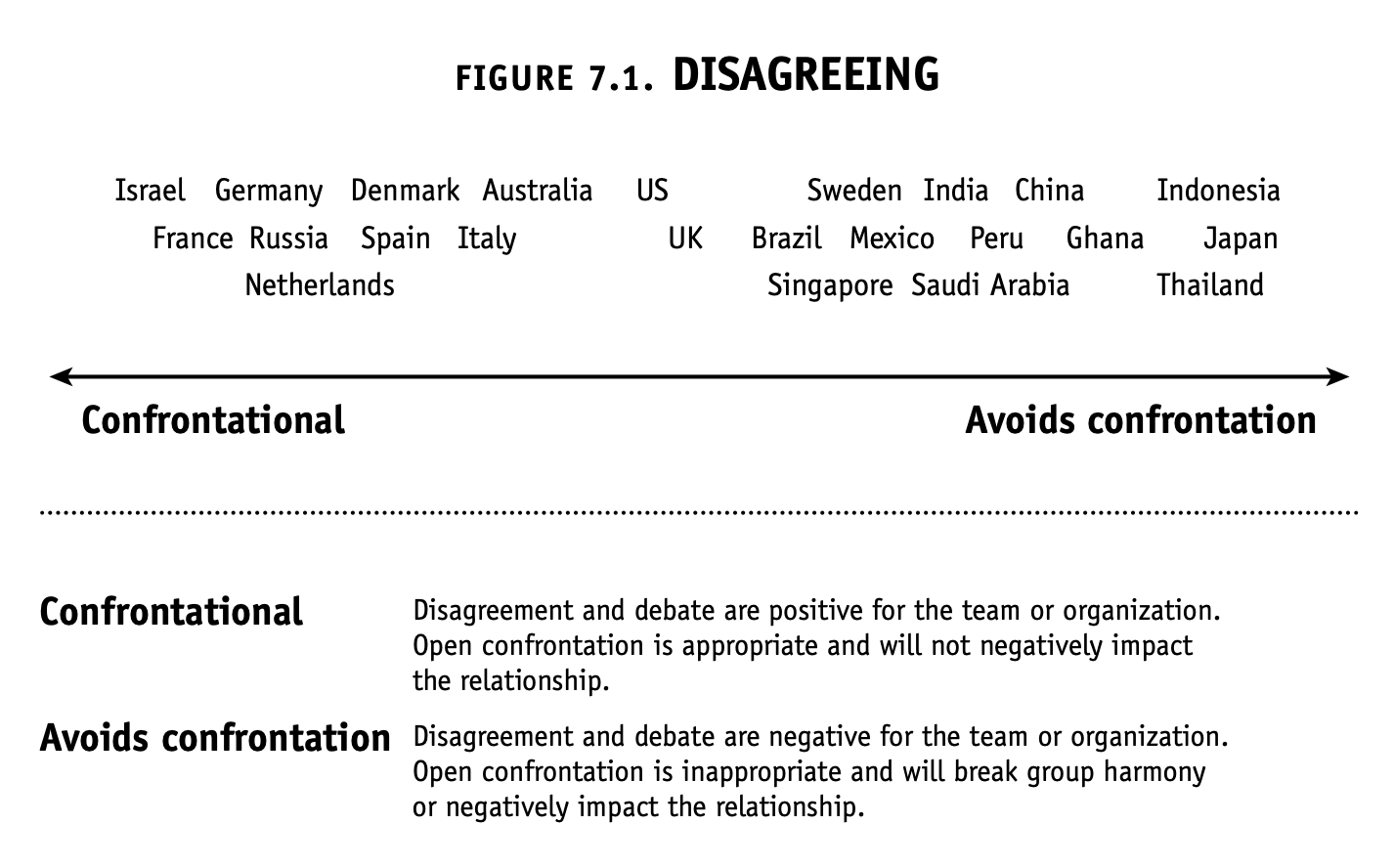
- Disagreeing: confrontational ↔ avoids confrontation
- Scheduling: linear ↔ flexible time
- Peach vs coconut cultures describe friendliness vs deep friendship
Notes
Introduction
- Individual behavior is a result of both personality + cultural traits
- 8 scales of cultural variance:
- Communicating: low ↔ high context
- Evaluating: direct ↔ indirect negative feedback
- Persuading: principles ↔ applications first
- Leading: egalitarian ↔ hierarchical
- Deciding: consensual ↔ top-down
- Trusting: task ↔ relationship-based
- Disagreeing: confrontational ↔ avoids confrontation
- Scheduling: linear ↔ flexible time
- ↑ consider relative positioning
- Often invisible, eg. fish in water
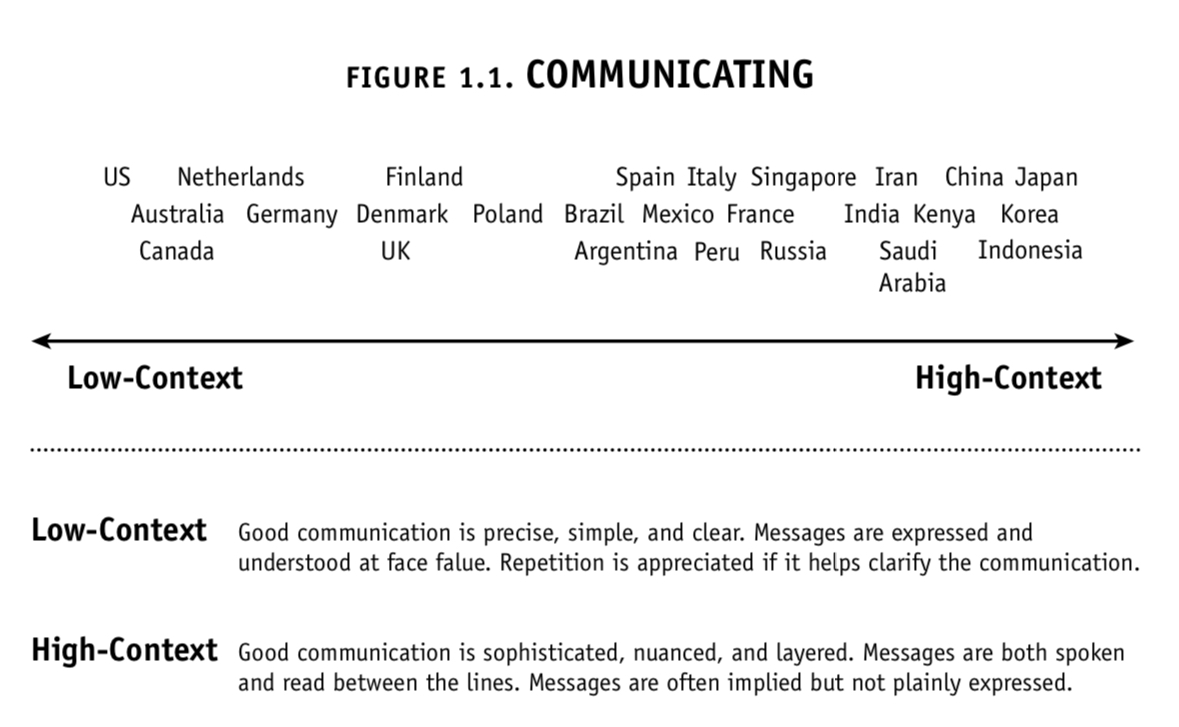
1: Communicating
- US, Anglo Saxon: literal, explicit
- Asia: implicit, subtle, layered, subtext
- Low vs high-context cultures
- English has 7x more words than French
- Education moves people more towards the culture’s extreme dominant tendency
- Self-deprecate
- Defer to low-context operation
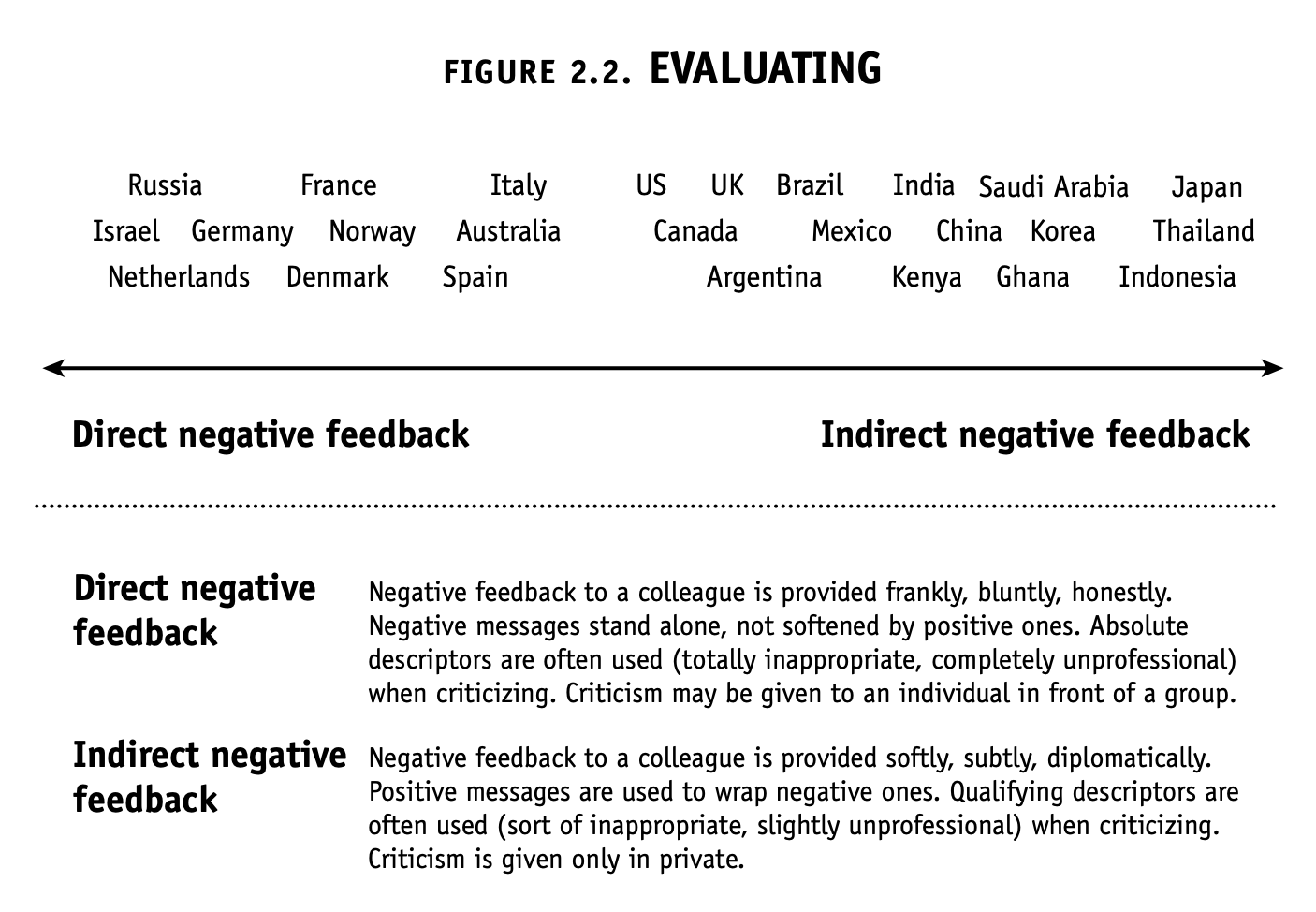
2: Evaluating
- Upgraders vs downgraders: “absolutely unacceptable” vs “not quite there yet”
- Honesty, directness as virtues vs rudeness
- Err on the side of being polite
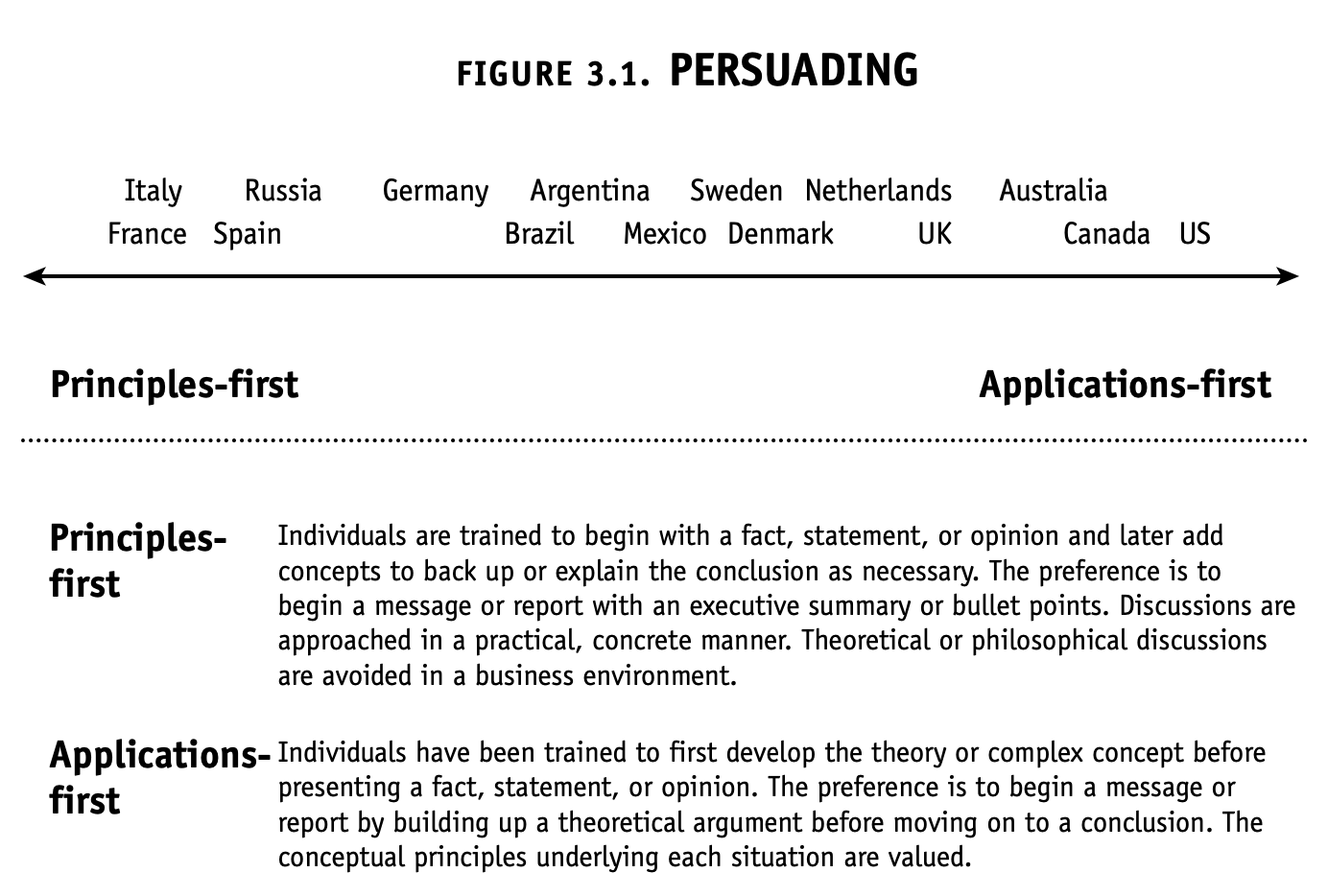
3: Persuasion
- Principles-first: why, deductive reasoning
- Applications-first: how, inductive reasoning
- Shorter emails, get to the point
- Case studies
- Wholistic thinking: (Asia) macro → micro
- Context-first
- Specific thinking: micro → macro
- Isolated subject
- Mono-cultural = faster, multicultural = more creativity
4: Leading
- Low vs high power distance
- Hierarchical: all problems pushed up
- Egalitarian: initiative, opinions are equal
- How god-like is the boss?
- Know what your behaviors signify
- Protestant: egalitarian, catholic: hierarchical
- Confucian social order
- Responsibility to care, teach, protect
- Defer to hierarchical
- Hierarchical → egalitarian:
- Meeting without the boss
- Invite people to speak up
- Egalitarian → hierarchical:
- Management by objectives
- Dress as team members dress
- Clearly state your style
5: Decisions
-
US: uniquely egalitarian + top-down
- Dynamic, flexible, unilateral
-
Japan: uniquely hierarchical + consensual
- Proposals start at mid-level, move up management chain via consensus
6: Trusting
- Cognitive trust: (head) based on accomplishments, skill, reliability
- Effective trust: (heart) emotional closeness, empathy, friendship
- US: ↑ separate; China: ↑ connected
- Business is business vs personal
- Loyalty to individual vs company
- Global trend towards relationship-based
- Peach vs coconut cultures: friendliness vs friendship, depth of vulnerable self
- Build on common interests
- Eg. music taste
- Be authentic
- Correlates with trust in legal system
- Drinking culture in Japan, China, etc.
- Mimic other person’s communication style
7: Disagreeing
- Group harmony: (Confucianism) saving face for everyone is paramount
- Correlated with nature of trust
- Eg. disagree with individual vs idea
- Extreme: challenge because interested
- Depersonalize
- Gather thoughts before the meeting
- Err on the side of soft disagreement
- “Let me play devil’s advocate”
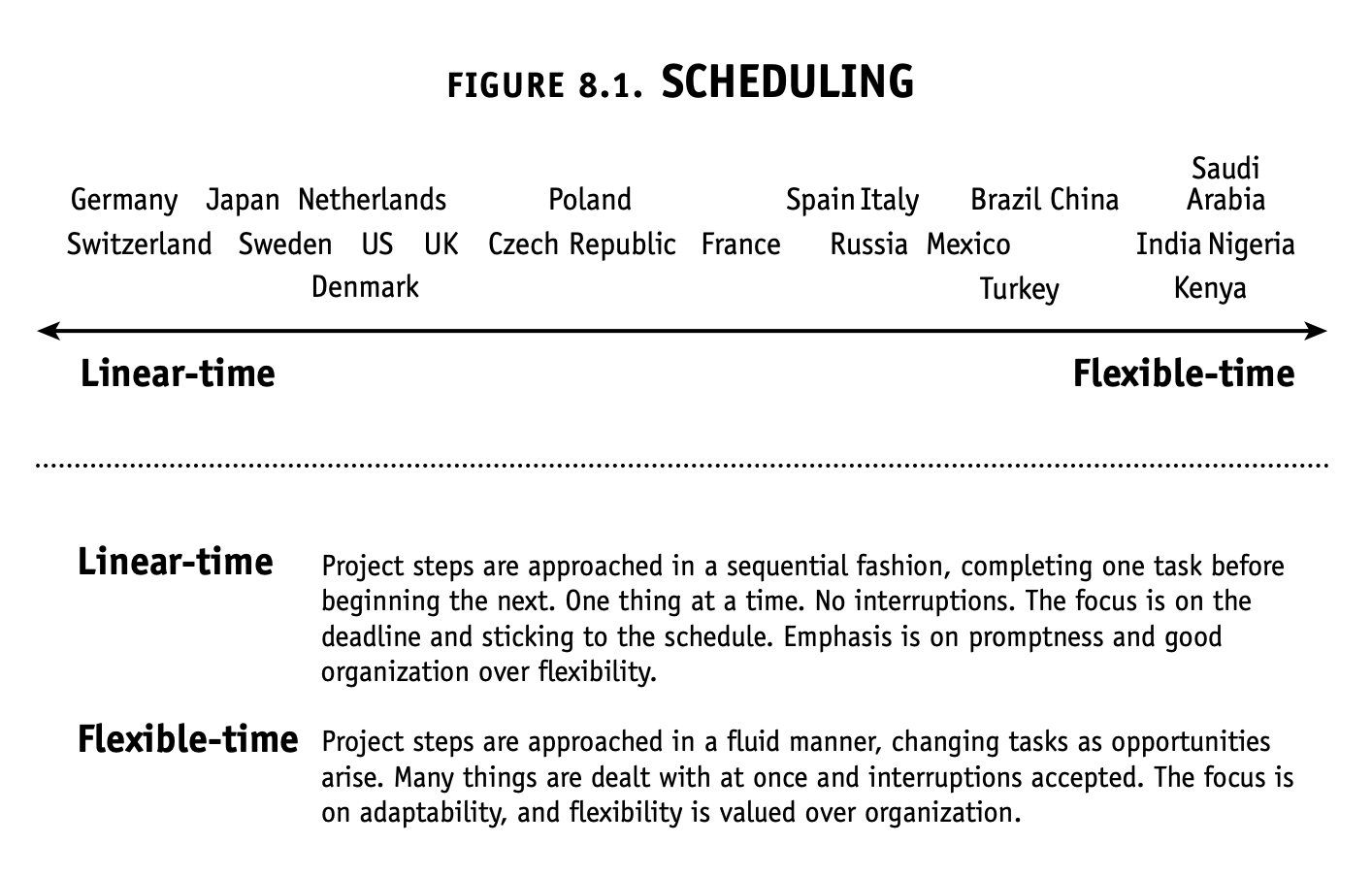
8: Scheduling
- Monochronic culture: (M) time as tangible, concrete, classification
- Polychronic culture: (P) time as flexible, approximate
- Based on perceived stability of environment
- Linear vs flexible time:
- Sequential vs parallel task completion
- Rigid vs flexible meeting agenda
- Flexibility → good at ad hoc