High Output Management
Andy Grove1983
- Length
- 8h 2m~235 pages
- Read
- Sep 2nd - 5th '23
Summary
A manager's output equals the output of their organization plus the output of neighboring organizations under their influence. The key leverage points are decisions and resource allocation — everything else is implementation. One-on-ones are the most important meeting type (subordinate's meeting, manager listens). Performance reviews must be honest and direct with specific examples. Task-relevant maturity determines management style: low maturity needs structured direction, high maturity needs monitoring. Training is the highest-leverage activity a manager can do — one course affecting 10 people's output for years.
Key Takeaways
Notes
1: The breakfast factory
1: The basics of production
- Management: 2 parts: motivation, training
- Total throughout time:
- Limiting step, dependencies, offsets
- 3 operations: process, assembly, test
- 3 factors: manpower, capacity, inventory
2: Managing the breakfast factory
- Indicators: metrics to evaluate performance
- Joint monitoring: prevent overacting
- Eg. quantity, quality
- Forecasting and adjustments
- Monitoring, gate test
- Variable inspection: based on indicators
- Increase leverage, work simplification
2: Management as a team game
3: Managerial leverage
- Activity vs output (whole company)
- Focus efforts where leverage is greatest
- Information sourcing:
- Verbal: most useful source of info
- Decision making:
- Future: eg. capital allocation
- Response: eg. dealing with crisis
- Nudging: small decisions or directives
- Role model: lead by example
- Managerial meddling → less initiative
- Delegate the activities you know best
- Use calendar as a production planning tool
- Ideal team size: 6-8 (1/2 day per member)
- Try to batch interruptions
4: Meetings
- Process-oriented meeting: info exchange
- Infuse with regularity
- Mission-oriented meeting: solve a problem
- Ad hoc
- 1-1: one hour, subordinate prepares agenda
- Staff meeting: with all subordinates
- Operation reviews: cross-functional sync
5: Decisions
- Peer group syndrome: leads to no decision
- Position power prejudice: timidness
- Structure decision-making process
6: Planning
- Project demand, supply, then reconcile
- Strategy → tactics
- Management by objectives: MBO
- Cascading complementary objectives
3: Team of teams
7: The breakfast factory goes national
- More overhead
- Managing mutually supportive teams
8: Hybrid organizations
- Balance responsiveness ↔︎ leverage
- Mission- vs function-oriented units
- Hybrid structure: inevitable
9: Dual reporting
- Matrix management
- Dual reporting: report to function and mission-oriented units
- Some Decisions made among peers
- Higher visibility, united brand message
10: Models of control
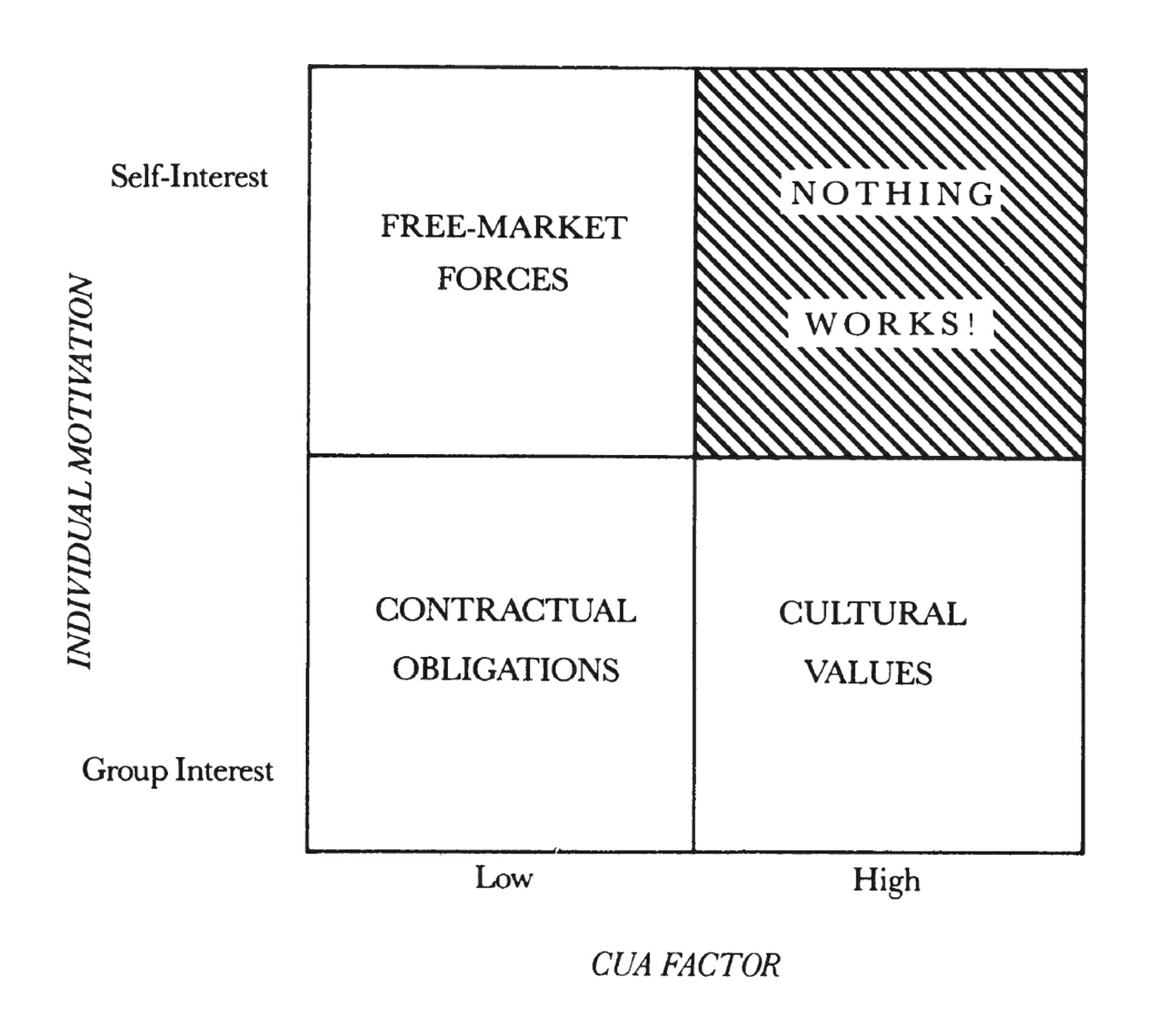
- Work behavior controlled by:
- Free market forces:
- Contractual obligations:
- Cultural values:
- CUA: complexity, uncertainty, ambiguity
- Motivation:
- Self ↔︎ group interest
- CUA factor: low ↔︎ high
4: The players
11: The sports analogy
- Achievement-driven motivation: goals
- Use money → need for achievement
- Survival → esteem, self-actualization
- The sports analogy: instill competition
12: Task-relevant maturity
- TRM: readiness to take task responsibility
- Per-task → mutual reasoning → monitoring
13: Performance appraisal
- Performance reviews are necessary
- Output and internal measures
- Time offset of performance
- Judge performance, not potential
- When delivering performance review:
- Level: be candid
- Listen: active listening
- Leave yourself out
- Stream of consciousness → summarize
- Identify a few key areas
- Provide examples
- Bad review: deflect → blame → accept
- Objective: action, not accepting blame
- Good review:
- Identifying room for growth is critical
- Deliver written assessment beforehand
- Gives time to process
- Allows for more focused discussion
14: Two difficult tasks
- Interviewing:
- Active listener, seek clarity
- Focus on mutual similarities
- Be blunt
- Ask them to ask you questions
- Reference: establish personal bond
- Handling quitting:
- Drop everything, determine why
- Make them comfortable rejoining
- Transfer teams if necessary
15: Compensation
- Compensation as task-relevant feedback
- Peter principle: rise to level of incompetence
16: Why training is the boss’ job
- Training is always the highest leverage task
- Practice teaching and gather feedback