Crossing the Chasm
Geoffrey Moore1991
- Length
- 9h 45m~234 pages
- Read
- Aug 23rd - 24th '23
Summary
Between early adopters and the early majority lies a chasm that kills most tech products. Innovators want evolution; the early majority wants a whole-product revolution with references from people like them. The strategy: pick a tiny beachhead niche, dominate it with a complete solution, use that install base as a reference to line up bowling pins into adjacent segments.
Key Takeaways
- Crossing the chasm: “fad” → “trend”
Notes
1: Discovering the chasm
1: High-tech marketing illusion
- Continuous ↔︎ discontinuous innovation
- Innovators, early + late majority, laggards
- ↑ target one at a time
- Haven’t crossed chasm: AI / neural networks, video conferencing (1998)
- Innovators was evolution, early majority wants revolution
- Illusion of sustained growth before chasm
2: High-tech marketing enlightenment
- Innovators are beachhead
- Needs to be exponential, cutting edge
- Let them in on the secret
- Implement their suggestions
- Find small, self-referencing market segment
- Line up “bowling pins” of small segments
- When uncertain, contract back to niche
- Four characteristics of visionaries:
- Low respect for colleagues’ experiences
- Interest in technology > industry
- Failing to recognize the importance of existing product infrastructure
- Overall disruptiveness: risk takers
2: Crossing the chasm
3: The d-day analogy
- Land and expand: identity small niche
- Can’t be sales-driven
- Whole-product solution for early pragmatist customers
- Focus: time to market leadership
- #1 priority: “establish a pragmatist install base that can be referenced”
- Strategic market segment that opens to other, larger markets
- Horizontal vs vertical marketing
- Total growth = all bowling pins, not just beachhead target market
4: Target the point of attack
- Identity market segments, do research and competitive analysis, then pick beachhead
- Informed intuition: isolate a few high-quality images to inform decision
- Target customer_ characterization_: ↑
- Description of detailed method
5: Assemble the invasion force
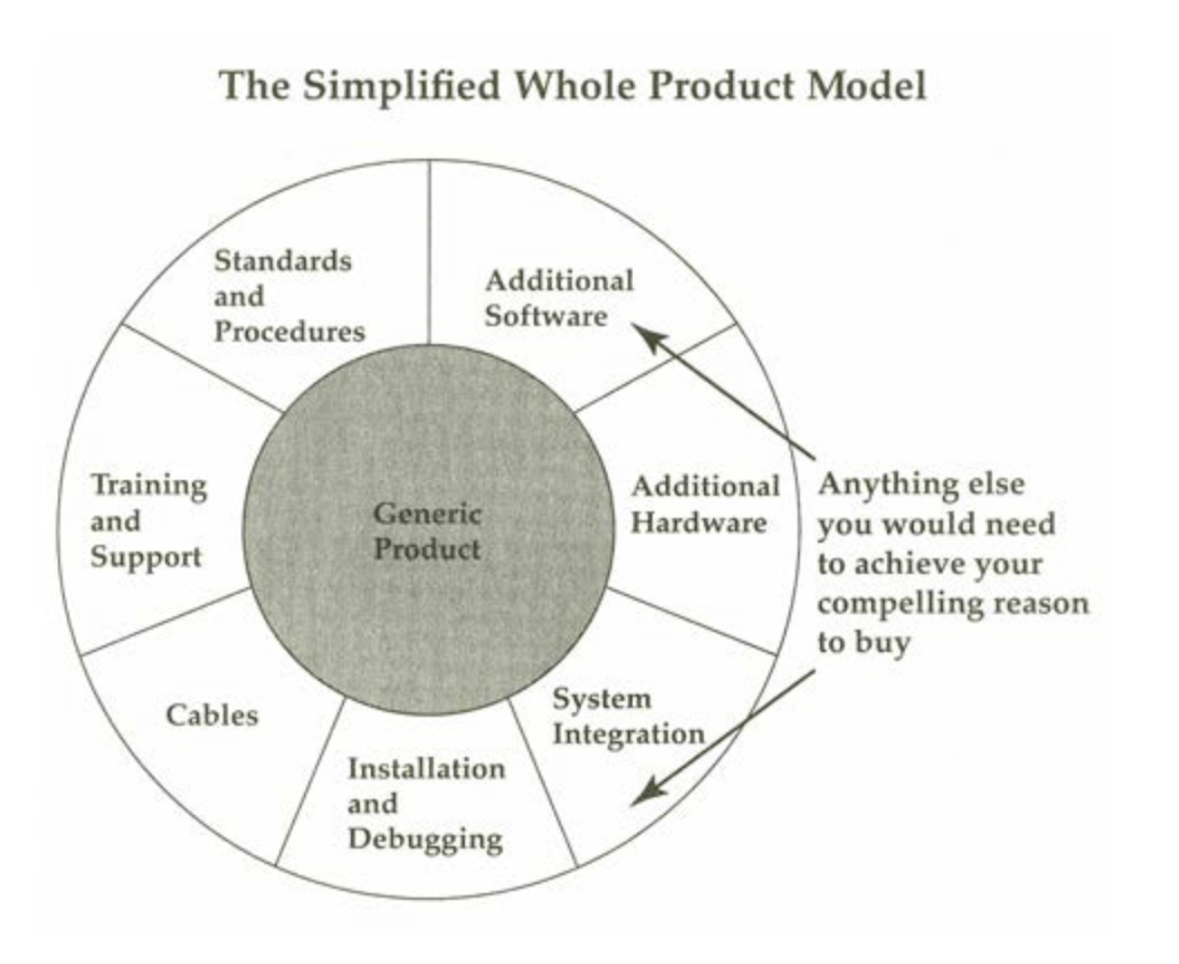
- Whole product marketing: expected product vs generic product (what actually ships)
- Generic → expected, augmented, potential
- Potential product: room for growth
- Viable whole product > generic product
- Forge strategic partnerships to realize whole product
- Technology, internet is inherently horizontal and whole product-based
6: Define the battle
- Create the market: create competition
- Pragmatists want established leader
- Can’t be self-serving or irrelevant
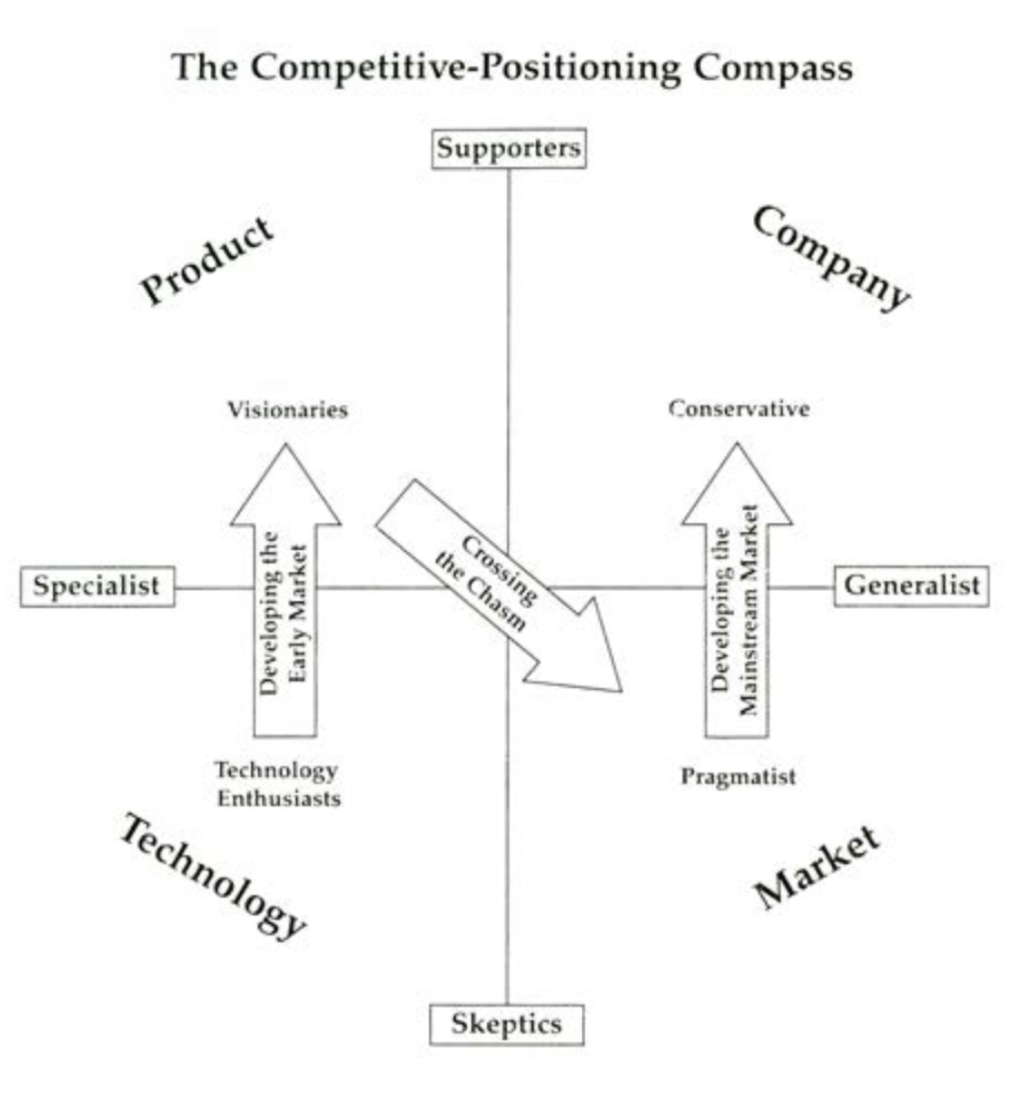
- Competitive positioning compass:
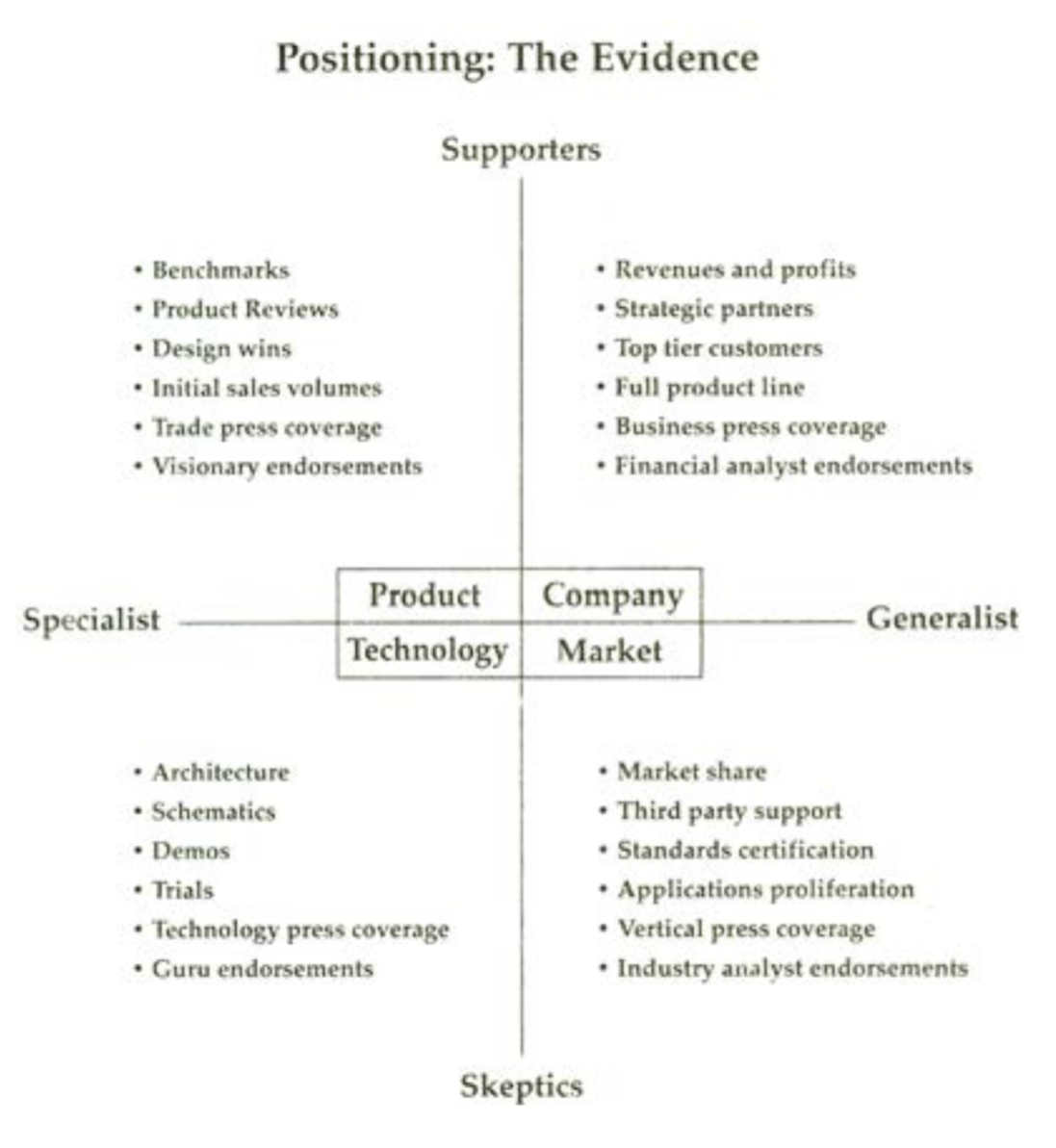
- Four domains of value in high-tech marketing: technology, product, market, company
- Product → market-centric approach
- Need to determine a 1) product, 2) market alternative to present to customers
- If no market alternative, don’t cross the chasm
- Keep it simple
- Marketing positioning: Claim, evidence, communication, feedback + adjustment
- Elevator pitch: * 2 sentence template
7: Launch the invasion
- Sales structures: direct, two-tier, one-tier retail, internet, two-tier VAR, national rollups, OEMs, systems integrators
- Channel optimization:
- Demand creators vs fulfillers
- Role in providing the whole product
- Potential for high volume
- Optimized for new customer relationships
- Direct > VAR > retail
- Pricing: match market leader
Conclusion
- Expected staircase of high-tech profits
- Calculations: market size, penetration, cost to mkt leadership, anticipated mkt share
- When to take on outside capital:
- High price of market entry
- Expected rapid market development
- Target market segment manager:
- Market segment manager:
- Whole product manager:
- Focus groups become important