Blue Ocean Strategy
Renee Mauborgne2004
- Length
- 8h 43m~224 pages
- Read
- Nov 28th - 30th '23
Summary
Stop competing in bloody red oceans of existing market space and create blue oceans of uncontested demand. The core move is value innovation — simultaneously pursuing differentiation and low cost by using the four actions framework: raise, reduce, create, and eliminate factors the industry takes for granted. Blue oceans account for only 14% of strategic moves but generate 61% of profits. Execution requires overcoming organizational hurdles through tipping point leadership — showing people what's wrong, making kingpin actions visible, and atomizing strategy so it's actionable at every level. The foundation is fair process: engagement, explanation, and clarity of expectation, which builds the voluntary cooperation needed to sustain a new value curve.
Key Takeaways
Notes
1: Blue Ocean Strategy
1: Creating blue oceans
- Blue ocean: unknown market space
- ↑ highly profitable demand creation
- 14% blue ocean → 61% profits
- Strategic move > company, team?
- Value innovation: creating leap in value
- Differentiation and low cost
2: Analytical tools and frameworks
- Strategy canvas: current state of play
- Where others are investing
- Four actions framework: new value curve
- Raise, reduce, create, eliminate
- ↑ compelling tagline
2: Formulating BOS
3: Reconstruct market boundaries
- Break from conventional wisdom
- 6 paths framework:
- Alternative industries (same purpose)
- Across industry’s strategic groups
- Eg. price
- Redefine industry buyer group
- Across complimentary offerings
- Before, during, after use
- Functional-emotional orientation
- Shape external trends over time
4: Focus on big picture, not numbers
- Talk to users
5: Reach beyond existing demand
- More competition → most customization
- Think non-customers before customers
- 3 tiers of non-customers
6: Get the strategic sequence right
- Utility → price → cost → adoption
- Technology innovation vs buyer innovation
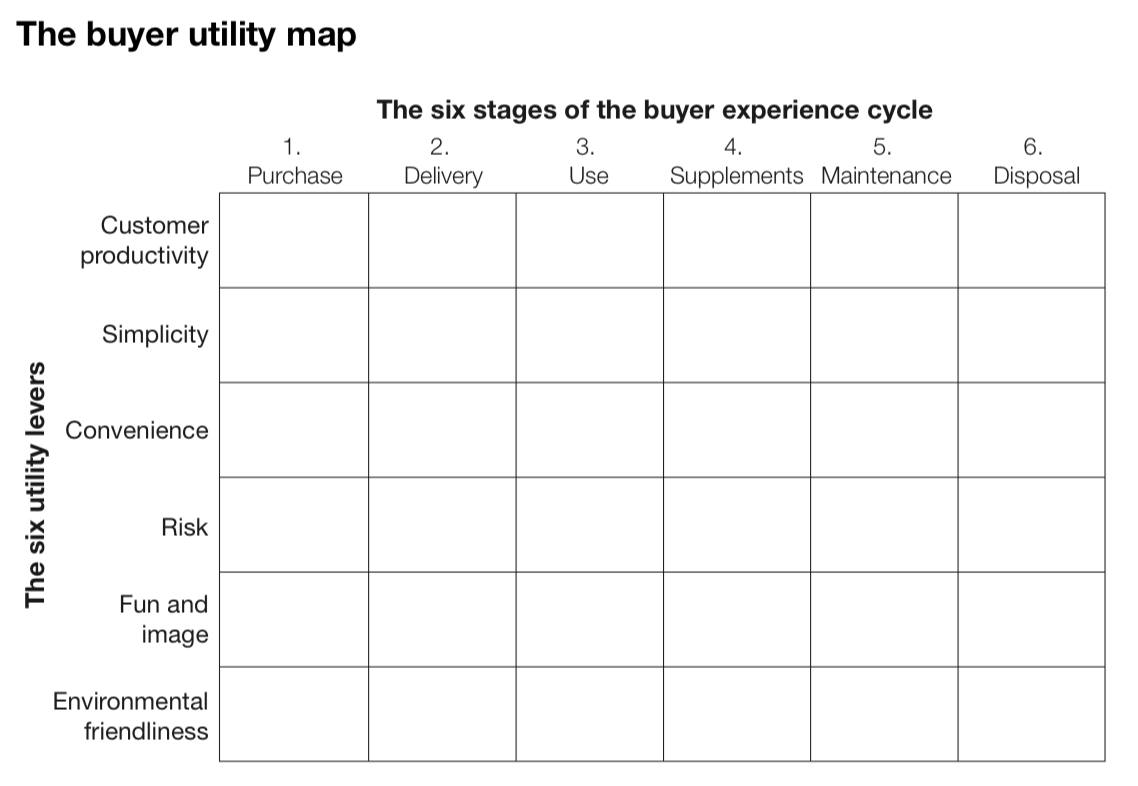
- The buyer utility map*
- Software: volume is key
- Patentability, excludability
- Price corridor: vs alternatives
3: Executing BOS
7: Overcome key organizational hurdles
- Convergence → divergence of value curves
- Win support: show the worst / what’s wrong
- 3 disproportionate factors for employees:
- Kingpins:
- Fishbowl management: make actions of kingpins highly visible, fair process
- Atomization: define strategic challenge to be actionable at all levels
- Conciliary: identify senior insider
8: Build execution into strategy
- Build deep trust and commitment
- Fair process → voluntary cooperation
- Engagement
- Explanation
- Clarity of expectation
- Care, respect for individuals as people
- Emotional, intellectual worth
9: Align profit, value, people propositions
- Unique offering: get creative
- Create win-wins
10: Renew blue oceans
- Prevent imitation
- Keep evaluating converging value curves
11: Avoid red ocean traps
- Focus on non-customers
- Value, not tech innovation
- Not just value cost differentiation
- Not niche markets, cuts across market segmentation